|
|
| MOQ: | 30000 s.q.m. |
| Standard Packaging: | EPE film + PE wrap + Processed wooden pallet |
| Delivery Period: | within 45 days, depends on the reserve of raw materials |
| Payment Method: | T/T,L/C |
| Supply Capacity: | 30000 kg per week |
| S/N | Item | Value | Test Method |
|---|---|---|---|
| 1 | Backing Film Type | Clear PET 20 μm ± 3% | - |
| 2 | Release Force (gf/25mm) | 8 | TESA 7475 Finat 10 |
| 3 | Sub-sequent Adhesion Rate (%) | 89 | - |
| 4 | Total Thickness (μm) | 22 | - |
| 5 | Sheet Resistance | 10^6-10^11 ohm/s.q. | Contact by five point probe |
| 6 | Tensile Strength | MD: 182 N/mm² TD: 216 N/mm² |
DIN53455-6-5 |
| 7 | Elongation @ break (%) | MD: 116% TD: 96% |
DIN53455-6-5 |
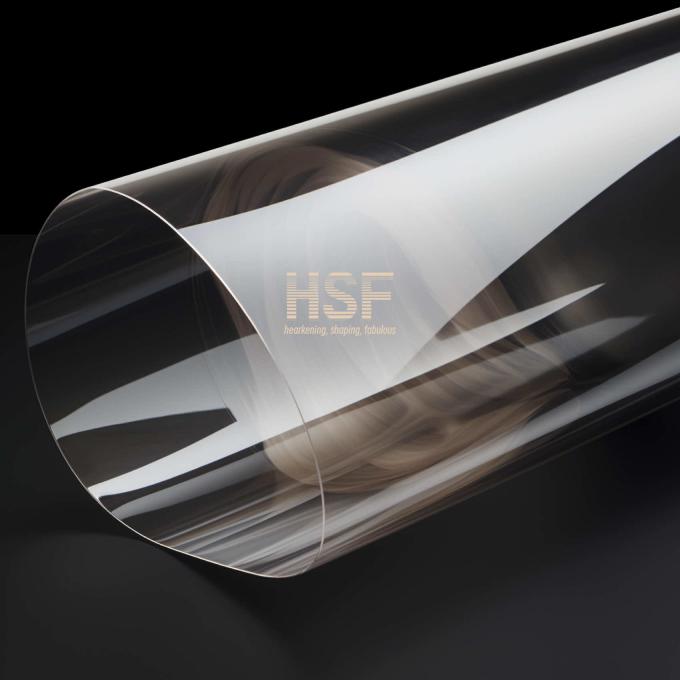
The main feature of PET anti-static coated film is its ability to prevent the buildup of static electricity. It has a conductive coating on one or both sides of the film, which allows charges to dissipate and prevents static buildup. This results in improved handling, processing, and protection of sensitive components and products.
The film is commonly available in transparent or translucent (colorless) forms, with other colors such as pink, blue, and yellow available for identification purposes and quality control differentiation.
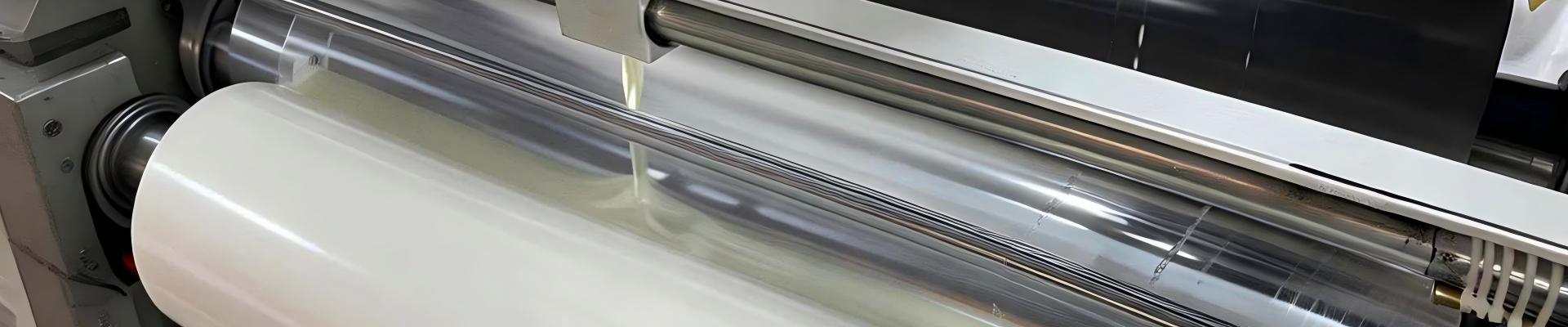
To coat an antistatic fluid onto an already produced PET film, the PET film is first unwound from its original roll and passed through a coating applicator that applies the antistatic fluid to the film's surface. This can be done using various coating methods such as gravure, reverse gravure, Mayer rod or air knife, depending on the viscosity of the antistatic fluid and the desired coating thickness.
After the coating process, the PET film is then passed through a drying oven to remove the solvent from the antistatic fluid. Once the solvent is evaporated, the film is rewound onto a new roll.
The effectiveness of this coating process depends on the type of antistatic fluid used and its compatibility with the PET film. The process is carefully controlled to maintain consistent coating thickness and avoid defects or inconsistencies in the final product.
|
|
| MOQ: | 30000 s.q.m. |
| Standard Packaging: | EPE film + PE wrap + Processed wooden pallet |
| Delivery Period: | within 45 days, depends on the reserve of raw materials |
| Payment Method: | T/T,L/C |
| Supply Capacity: | 30000 kg per week |
| S/N | Item | Value | Test Method |
|---|---|---|---|
| 1 | Backing Film Type | Clear PET 20 μm ± 3% | - |
| 2 | Release Force (gf/25mm) | 8 | TESA 7475 Finat 10 |
| 3 | Sub-sequent Adhesion Rate (%) | 89 | - |
| 4 | Total Thickness (μm) | 22 | - |
| 5 | Sheet Resistance | 10^6-10^11 ohm/s.q. | Contact by five point probe |
| 6 | Tensile Strength | MD: 182 N/mm² TD: 216 N/mm² |
DIN53455-6-5 |
| 7 | Elongation @ break (%) | MD: 116% TD: 96% |
DIN53455-6-5 |
The main feature of PET anti-static coated film is its ability to prevent the buildup of static electricity. It has a conductive coating on one or both sides of the film, which allows charges to dissipate and prevents static buildup. This results in improved handling, processing, and protection of sensitive components and products.
The film is commonly available in transparent or translucent (colorless) forms, with other colors such as pink, blue, and yellow available for identification purposes and quality control differentiation.
To coat an antistatic fluid onto an already produced PET film, the PET film is first unwound from its original roll and passed through a coating applicator that applies the antistatic fluid to the film's surface. This can be done using various coating methods such as gravure, reverse gravure, Mayer rod or air knife, depending on the viscosity of the antistatic fluid and the desired coating thickness.
After the coating process, the PET film is then passed through a drying oven to remove the solvent from the antistatic fluid. Once the solvent is evaporated, the film is rewound onto a new roll.
The effectiveness of this coating process depends on the type of antistatic fluid used and its compatibility with the PET film. The process is carefully controlled to maintain consistent coating thickness and avoid defects or inconsistencies in the final product.